
Online Marketing Tips Blog
In this Daily blog, I'll try to answer the most burning questions for online marketing that I get in my consulting business. We help online business owners who are in affiliate marketing, coaching, eLearning and Online Events every single day. I'll share that info with you!
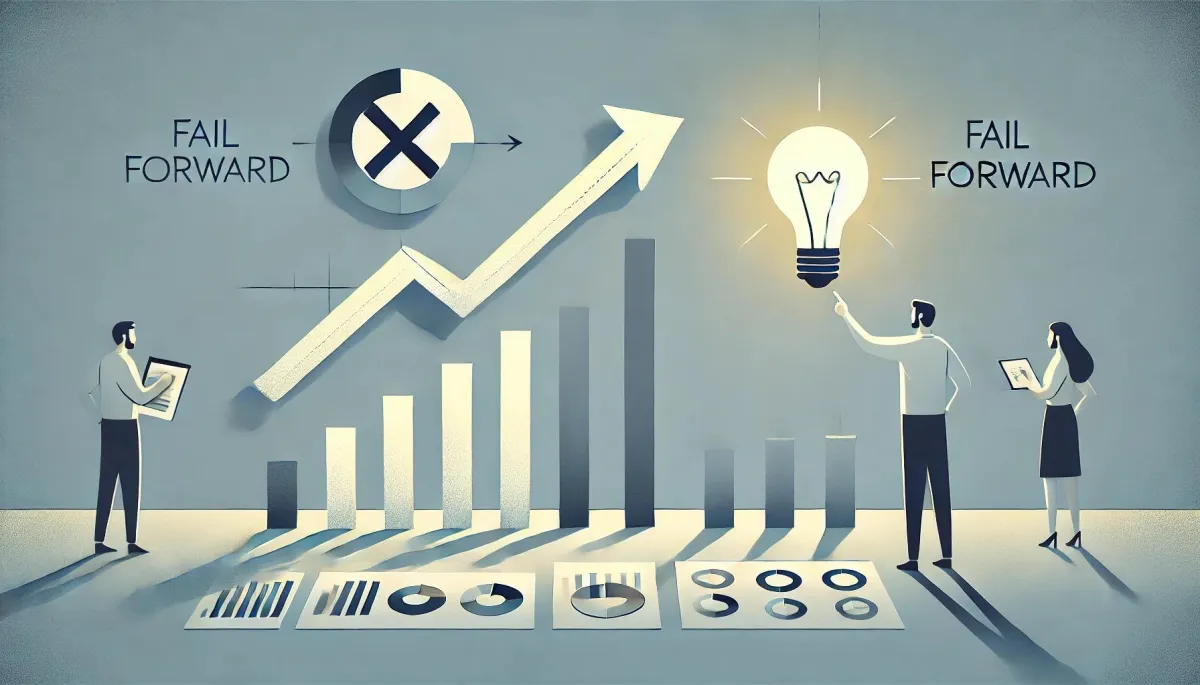
Why Digital Marketers Learn More From Failures Than Successes
“Failing forward” is the secret to becoming an exceptional digital marketer.
It's tempting to focus only on wins—what worked, what boosted ROI, what broke traffic records. But the truth is, your failures teach you the most valuable lessons. If you want to grow as a marketer, refining your strategies, understanding your audience, and optimizing your outputs, there’s one mantra to live by: fail small, fail fast, and learn every step of the way.
This blog explores why failure matters, how it uniquely shapes digital marketing strategies, and actionable ways you can leverage those setbacks for better results.
Why Failure is Your Best Teacher in Digital Marketing
Success offers rewards, but failure offers growth. Marketing is riddled with unknowns—platform changes, shifting algorithms, evolving audience behaviors—and mistakes are inevitable. Here's why those missteps often prove more valuable than triumphs:
1. Failure Highlights Blind Spots
Success doesn’t tell you what you missed. It simply tells you something worked. Failures, however, expose the flaws in your assumptions, creative choices, or data interpretation. A poorly performing ad campaign, for example, might reveal that your audience research fell short or your call-to-action didn’t resonate.
2. It Forces Adaptability
The marketing landscape changes rapidly. Platforms update algorithms, consumer trends shift, and competitors evolve. Learning from failures improves your ability to adapt quickly. You’re better equipped to adjust your strategies based on real-world data rather than outdated assumptions.
3. It Builds Resilience
Accepting and analyzing failure fosters a growth mindset. Instead of fearing mistakes, you come to view them as opportunities to learn. A/B testing on landing pages, for example, isn’t about avoiding failure—it’s about actively seeking feedback on why one version performs better than another.
4. It Provides Data for Better Decisions
Failures can often bring significant insights. Did a campaign struggle due to the wrong audience segmentation, or was the creative execution not compelling? Data speaks louder in failure than success—and that data helps refine future campaigns.
5. Failure Develops Innovation
When a conventional approach doesn’t work, it pushes you to think outside the box. Some of the most creative marketing campaigns stem from trying new tactics after traditional ones flopped.
Failing Small, Failing Fast, Failing Smart
Now that we understand why failure is so pivotal, it’s important to execute those “small failures” intentionally. Here’s how you turn hiccups into a formula for success without risking major losses.
Step 1: Start Small, Scale the Wins
Test concepts and strategies on a smaller scale before committing substantial resources. Trying a new ad format? Start with a low-budget campaign to test its impact. If it works, scale it. If not, assess why it didn’t—and save most of your budget.
Step 2: Fail Fast with A/B Testing
A/B testing is your roadmap to intentional failure. Whether it’s testing headlines, CTAs, or targeting options, create two versions of your campaign and run it against segmented audiences. Learn from the data and iterate quickly.
Example: Are you testing the effectiveness of two different Facebook ad headlines? Launch both with a small allocation of your budget and track performance metrics (CTR, conversions, etc.). Pause the underperformer and double down on what works.
Step 3: Analyze the "Why" Behind the Failure
The "why" is critical to learning. If your previous email campaign had a below-average open rate, consider these kinds of questions:
Was the subject line compelling?
Did the timing align with your audience's habits?
Was there segmentation based on behaviors or demographics?
Digging into the "why" uncovers insights that will drive your next campaign.
Step 4: Document & Build Your Playbook
Failures should never go undocumented—they provide the blueprints for future success. Maintain a ‘Lessons Learned’ document for your team to reference before launching similar campaigns.
For example, noting “carousel ads performed poorly in this demographic” or “clickable CTAs performed better than animations in email campaigns” can save countless hours and dollars down the line.
Step 5: Fail Forward, Not Sideways
Failing forward isn’t just about identifying problems—it’s about applying insights to future endeavors. Each failure must act as a stepping stone toward a more refined, impactful strategy. Always ask yourself, “How is the next campaign stronger because of what I’ve learned?”
Step 6: Turn Failures into Community Learning Moments
Sharing lessons learned with your team or industry community can turn a personal loss into a shared win. Whether it's through webinars, team huddles, or LinkedIn posts, transparency about your process shows not only accountability but also thought leadership.
Real-Life Examples of “Fail Small, Fail Fast” in Action
Understanding the theory is great. Seeing it in action is even better. Here are two real-world examples where marketers turned failures into pivotal learning moments.
Case Study 1
A prominent e-commerce brand launched a holiday email campaign with too many CTA buttons. Why it failed:
Customers clicked but didn’t know where to go next.
Conversion rates dropped due to decision fatigue.
Lesson Applied
Future campaigns focused on one clear CTA per email, boosting conversions by 35%.
Case Study 2
A DTC company overspent on Instagram ads targeting luxury demographics—but sales were insignificant. Why it failed:
The product’s price point didn’t align with the targeted audience.
Messaging didn’t highlight exclusivity, a key motivator for luxury buyers.
Lesson Applied
The company pivoted its targeting strategy, refining their messaging and redirecting ad spend to premium content like influencer collaborations, resulting in significant gains.
How to Foster a Pro-Failure Team Culture
Encouraging manageable failures (without fostering an environment of recklessness) requires intentional team management.
Normalize Conversations Around Failure
Create an open dialogue where team members feel safe sharing lessons from unsuccessful campaigns. Leaders setting the tone for “constructive feedback, not criticism” helps everyone grow.
Reward Learnings, Not Just Wins
Highlight team members who uncover invaluable lessons through failed marketing efforts. This drives home the notion that failure can be productive, not punitive.
Encourage Experimentation Within Guardrails
Teams should feel empowered to take calculated risks—but guardrails should always be in place to limit fallout. Examples include predetermined budgets and agreed-upon KPIs for new experimental campaigns.
The Bigger Picture in Learning Through Failure
By adopting a “fail small, fail fast” mentality, digital marketers set themselves up for long-term success. Failure isn’t the opposite of success; it’s the preparation for it. Great campaigns rise on the back of missteps that taught their creators to think critically, adapt swiftly, and innovate boldly.
Every experiment that doesn’t hit performance benchmarks brings you another step closer to a breakthrough campaign. The key is to keep trying, failing smaller each time, and learning faster.
Take your campaigns to the next level with intentional experimentation and consistent learning. The more you fail forward, the better marketer you become.
We have an incredible new course that will literally change the way you think about yourself in business as well as in life, to improve any specific portion of your life! Whether you are struggling with a personal relationship, or struggling with any aspect of your business, this 5 Step Process is truly a game changer.
Disclaimer: If you click on links we provide and make a purchase, we may receive compensation. There is never any guarantee of income in any of the links or programs we provide.

If you have specific questions you would like to see answered in this blog, please send them to me at [email protected]. I will try to address every question here.
If you follow the links in my blog, some of them will be affiliate links and I will be compensated if you purchase a course or product from these links. This is no way increases your price or changes my opinion on these courses. I only recommend things I use in my business.
For the absolute best training online for Affiliate Marketing, Coaching, Events & Masterminds and eLearning - Online Courses: Check out our Flagship Program Here.

Copyright © 2025 | All Affiliate Cash | All Rights Reserved
There may be affiliate links on these pages. When you follow them and purchase something, I may be paid a commission. This does not raise your cost of the item, and does not influence my opinion or review of the item in any way.
NOT FACEBOOK™: This site is not a part of the Facebook™ website or Facebook Inc. Additionally, This site is NOT endorsed by Facebook™ in any way. FACEBOOK™ is a trademark of FACEBOOK™, Inc.